Spoiler Alert: I may ruin this show for you. Not because I’ll share plot points (I will), but because I’ll poke at the show’s issues. If you just want to love it, read no further…
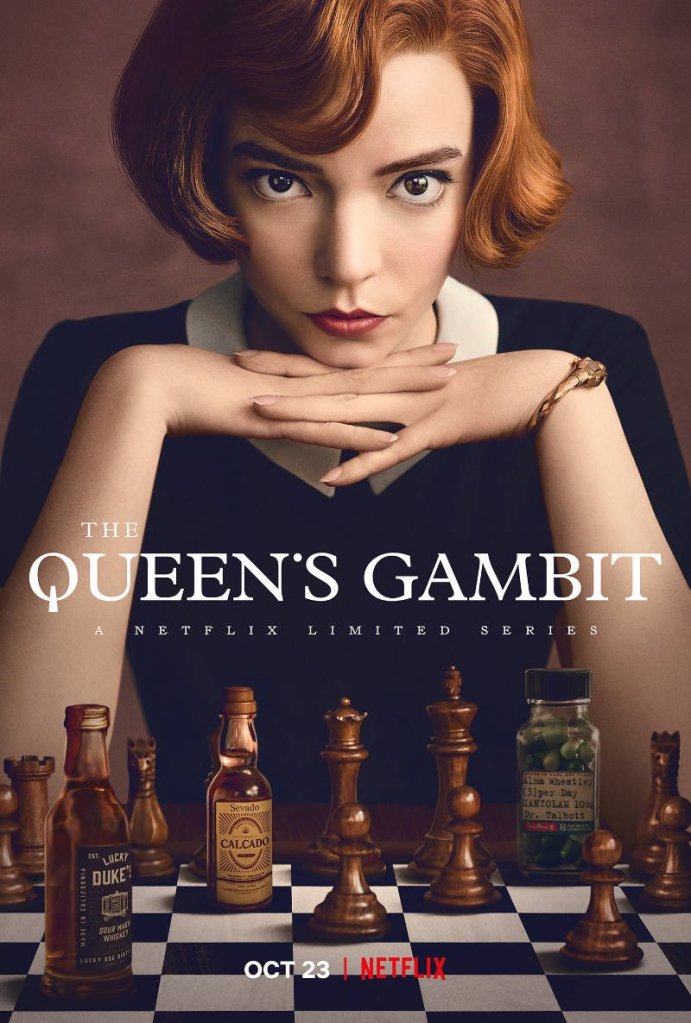
Okay, still here? Then I’ve got four chief complaints:
1. No more male saviors, please!
2. Jolene should have her own Netflix series instead of being a prop to punctuate 1960s white culture.
3. Alcoholics and drug addicts want their diseases back.
4. People on the autism spectrum want their disorder back.
Details follow….
1. No more male saviors, please!

In a show about the power of a woman to succeed in a “man’s world,” there sure is a lot of mansplaining going on. While the first episodes make such mansplainers eat their instructions (the twins in episode 1 or Benny Watts in episode 3), the later episodes turn these jerks into Beth’s mentors and gurus. No. Just no. Writers, you had a choice: make the mom, Jolene, ANYONE Beth’s coach and you could have made a show about female empowerment instead of female exceptions.
In a study of 72 of the top films from 2012, Chloe Beighley and Jeff Smith of the Grand Rapids Institute for Information Democracy found that “Men are seen as the protectors, the saviors, the breadwinners, and the know-alls… In the few movies where we see strong lead female characters, we also see them having the support of at least one male who is involved in their situation in some way where the female ends up needing their help.” It’s been eight years since that study and we have had the #metoo movement, for God’s sake! Can’t we have a strong woman who is just that—strong? Making these unlikable guys into Beth’s heroes at the end is at best undercutting of her character’s unique gifts and at worst a hedge to assuage male egos (yes, she’s the greatest chess player of all time, but she still needs men to help her win!).
And if that isn’t enough, Beth falls in love with one of these ego-maniacs. Sigh.
2. Jolene should have had her own Netflix series instead of being a prop to punctuate 1960s white culture.
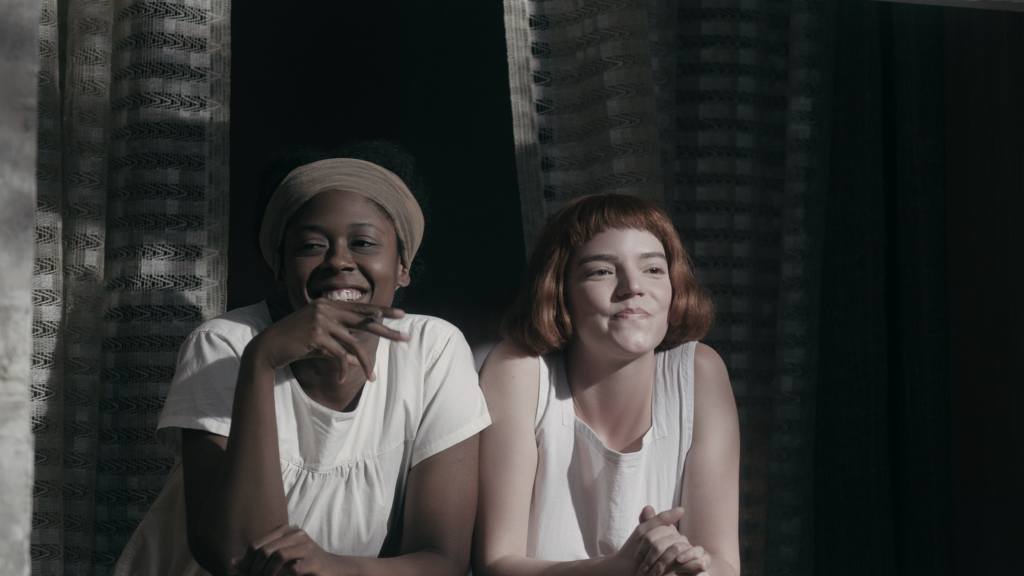
It is set up in episode one: the Black-white buddy scenario where the Black person helps the white person overcome obstacles, achieve the seemingly impossible, and become a “whole” person (see Lethal Weapon, Beverly Hills Cop and just about every 1980s comedy where a white and Black man are friends/co-workers). Then Jolene disappears until that critical moment when Beth needs divine intervention: enter the Magical Negro. Here’s how author and critic Nnedi Okorafor-Mbachu describes the character: “The archetype of the Magical Negro is an issue of race. It is the subordination of a minority figure masked as the empowerment of one. The Magical Negro has great power and wisdom, yet he or she only uses it to help the white main character; he or she is not threatening because he or she only seeks to help, never hurt. The white main character’s well-being comes before the Magical Negro’s because the main character is of more value, more importance.”
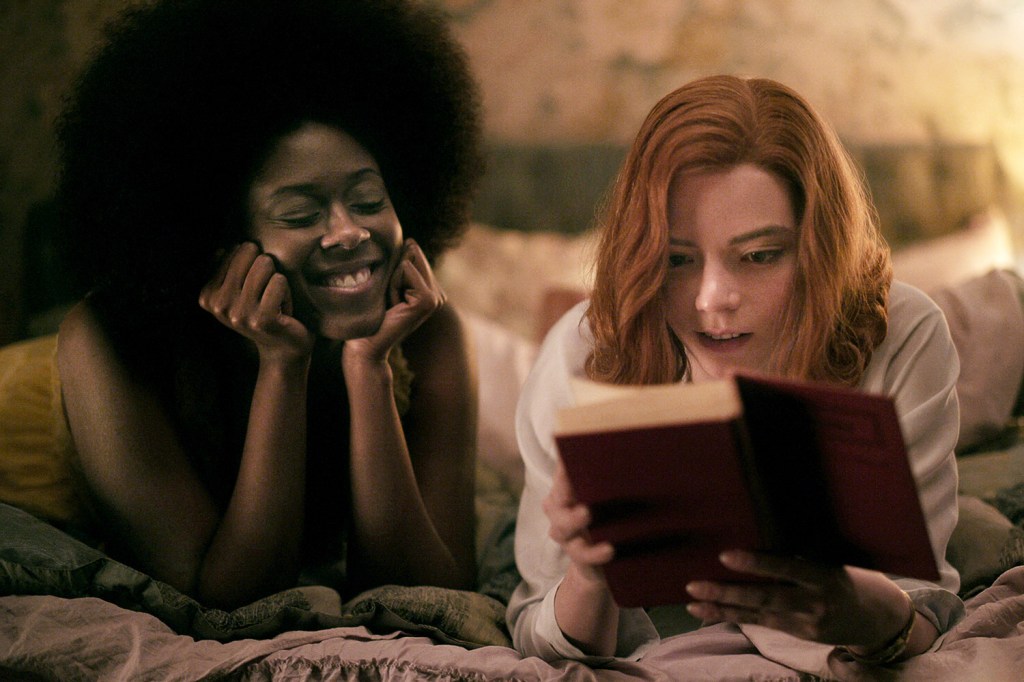
Spike Lee called out this stereotype almost two decades ago. The nation has been in the streets demanding respect and understanding of Black lives. And yet the top-grossing Netflix series of all time gives us a Magical Negro. Come on.
3. Alcoholics and drug addicts want their diseases back.
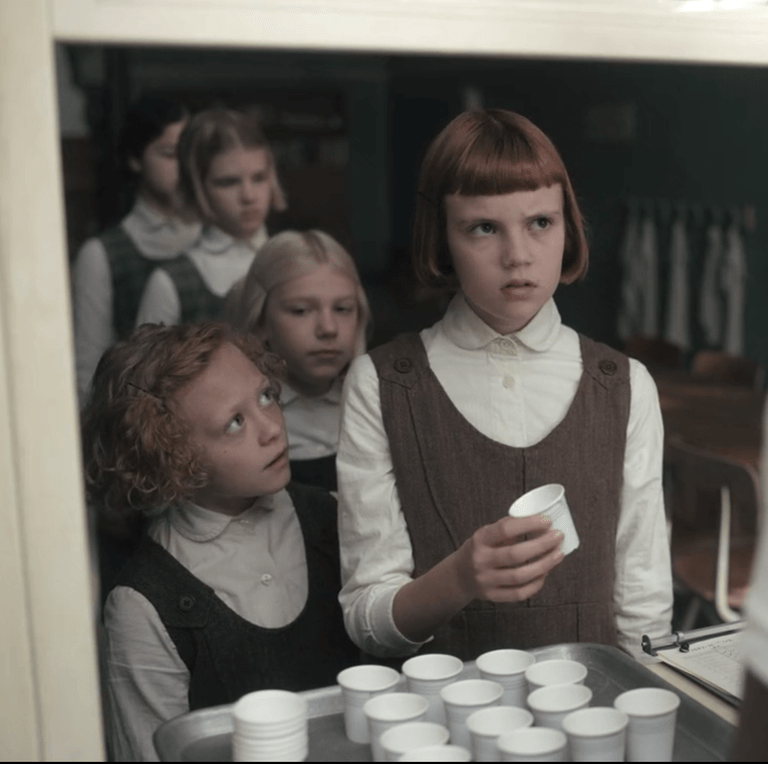
When Beth and her fellow orphans are plied with tranquilizers in the opening episode, the show exposes a hideous and all-too-real practice of 1960s institutions intended to provide care for the vulnerable. Not a new critique (see Sylvia Plath’s The Bell Jar that was written in 1963 and published in the US in 1971, in which the protagonist undergoes electroshock therapy). But powerful, none-the-less.
Yet when the show presents the drugs as the gateway to Beth’s genius, it distorts this critique and creates a concept of dependency related to ambition rather than disease. Yes, addiction causes changes in the functioning of the brain, particularly those systems that are involved in reward, motivation and memory. That’s a bad thing. But in The Queen’s Gambit, the brain changes are transposed onto ways of thinking and reasoning that make her a savant. The message? Take drugs and you too can become brilliant.

And if that intense thinking becomes too much? Well drown it out with alcohol. The show definitely depicts Beth’s alcoholism as a problem and certainly does not glorify it. However, when she hits “rock bottom” we see her dancing in her underwear, more uninhibited than her usual staid self and belting out lyrics that seem empowering on the surface but reveal deep insecurities: “I’m your Venus, I’m your fire, At your desire.” A drunk woman dancing as an object for male desire. Ugh.
But don’t worry, she sobers up. And with the help of her male saviors she stays sober long enough to win! Thank God alcoholism can be cured so easily. Just a matter of personal choice, will power and a few goading friends. Never mind that the American Medical Association (AMA) declared alcoholism a disease in 1956 and the National Institute on Alcohol Abuse and Alcoholism (NIAAA) focuses on alcohol use disorder (AUD), which NIAAA Director George F. Koob, Ph.D. explains is “a medical disorder ranging from mild to severe, rather than a moral failing.” The NIAAA defines AUD as “a chronic relapsing brain disorder characterized by an impaired ability to stop or control alcohol use despite adverse social, occupational, or health consequences” and estimates that 15 million people in the United States have AUD.
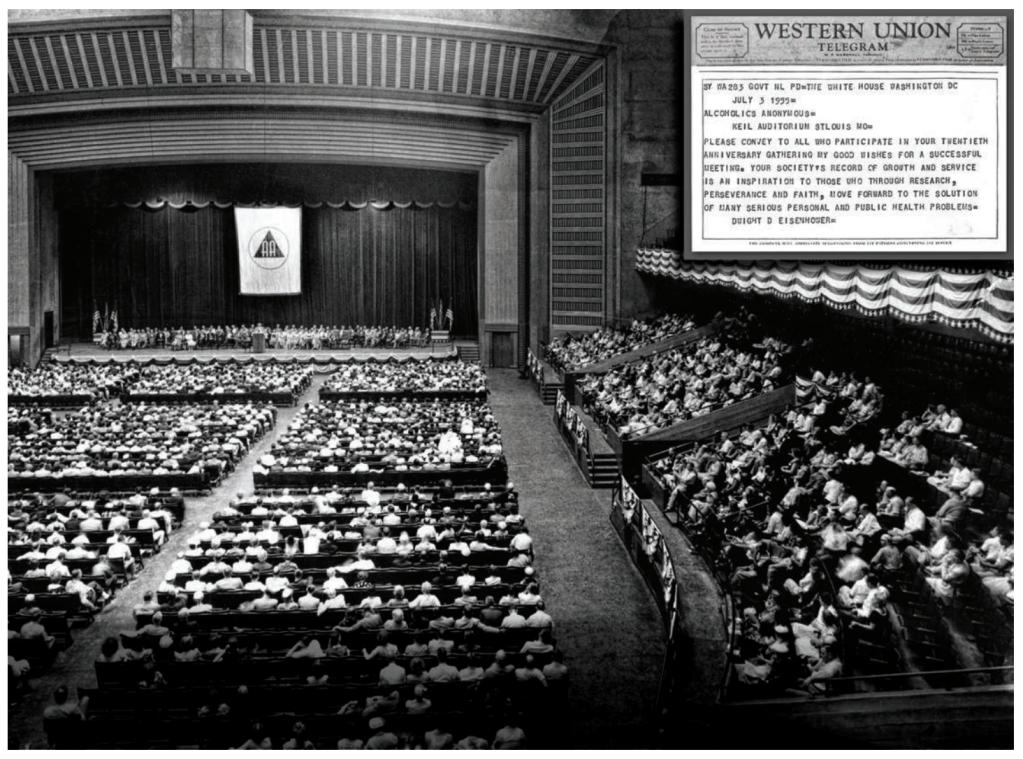
Send Beth to Alcoholics Anonymous (AA) or a therapist or something so that she and the spectators can understand her diseases instead of learning the myth that all an addict needs to do is make better choices. AA was well-established by the 1960s with publication of the second edition of its main text in 1955 hitting more than 1,150,500 copies. It was a thing. Would have worked well for the time period. So, yeah.
4. People on the autism spectrum want their disorder back.
It is never made explicit that Beth is on the autism spectrum, which arguably is because autism wasn’t established in the Diagnostic and Statistical Manual (DSM) of Mental Disorders until 1980 (DSM-III) when it was defined as a “pervasive developmental disorder.” And while it is a strange idea to try to “diagnose” a fictional character with a disorder, that is what the viewers of A Queen’s Gambit are left to do. She takes things literally, displays little affect, is socially awkward, doesn’t talk much, becomes fixated on things (books, clothes, chess), and has extraordinary analytical/cognitive skills.
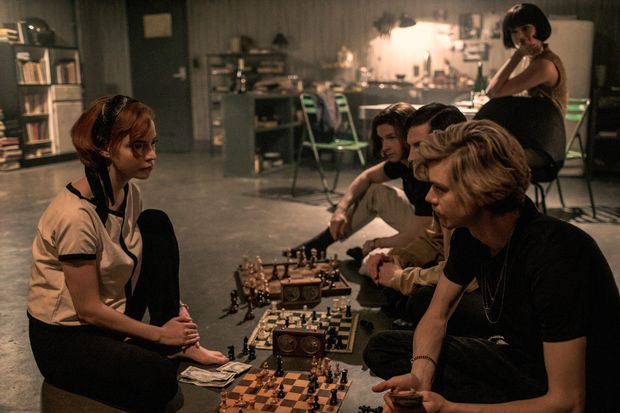
Beth’s character embodies the media’s favorite version of autism: the autistic savant. Sheldon in The Big Bang Theory, Dr. Shaun Murphy in The Good Doctor and Raymond in Rain Man are just a few of the most well-known versions of this stereotype. While it is true that some people on the autism spectrum exhibit savant abilities (about 10%), many more (approximately 40%) have an intellectual disability or a lower range IQ. Writing for Vice in 2017, Sarah Bradley explained the problem of the media’s obsession with the autistic savant, noting that while 1 in 68 children are diagnosed as on the autism spectrum, “we are still afraid to look autism in the face on screen and accept it for what it really is: a disability that is difficult, challenging, exhausting, and sometimes painful. This kind of convenient erasure does all of us—particularly those in the autism community—a deep disservice. Living with, working alongside, and caring for someone with autism is messy.”
My nephew is autistic and when his mother explains to people his disorder, she often adds the caveat “and not the kind where he’s going to make a billion dollars coding” (referring to the frequent representations of those with extraordinary computing skills as on the spectrum). That she has to add this to her explanation of his autism tells you everything you need to know about how these kinds of representations impact the community. There is “good” autism and there is “bad” autism. Media turns the spectrum into a hierarchy where characters like Beth Harmon make what is for most people a disability seem like a superpower.
But I loved the show…
Now, it would be easy for me to throw all of the blame for these problems on the writers, producers, Netflix, etc. And don’t get me wrong… SHAME ON NETFLIX! However, I binged the show. Had to watch it. Loved it. Couldn’t get enough of it. Was sad when it was over. And clearly, I’m not alone. 62 million Netflix members streamed the show within the first 28 days of its release, making it the most-watched scripted limited series on Netflix.
The show is irresistible. We clearly desire these representations whether we acknowledge it or not. So, maybe a better title for this piece would be “What’s Wrong With 62 Million People?” The answer? I don’t know but I’ll be talking with my therapist about it and suggest that you do too.
 wait, what?
As an autistic woman diagnosed at a late age due to the lack of awareness around autism in women, I strongly disagree with your point on the representation of ASD. For me it felt like I was finally represented on screen. Almost all autistic (coded) characters on TV or film are men and show little struggle with the downfalls of ASD. She might have some similarities with these (overdone) characters, but she gives a new perspective on feminine autism which was desperately needed to raise awareness. There should be more representation of ASD in general, but that should not exclude savant-like characters as that remains part of the community’s experience.
LikeLike
Excellent point. I hadn’t thought about how few female ASD characters there are when I wrote this. I was overly focused on the emphasis on savant characters and the impact that has on folks understanding the *spectrum*. Thank you for sharing!
LikeLike
I have to say that point 4 is pretty ironic given that 1. You’re not autistic, you just have an autistic nephew 2. the source you gave supporting the argument is not from an autistic person, but just a person with an autistic son, and 3. none of the sources you gave from autistic people actually supported this claim. While there problems with the savant narratives, it’s from the lack of nuance, not the positivity, and the doom-and-gloom narrative is much more popular and much worse. Yes, we want our disorder back – but not from tv producers. No, we want it back from relatives who think they can speak for us.
LikeLiked by 1 person
This is an excellent response. Thank you.
LikeLike